Expired and dropping .uk domains: how the drop works, and what 45 days of data show
A .uk name can be renewed until 90 days after expiry and drops at 95. The lifecycle in force today, what changes on 9 February 2027, what Nominet's daily drop list does and doesn't tell you, and what 205,988 names reaching their drop time in 2026 show.
Data through
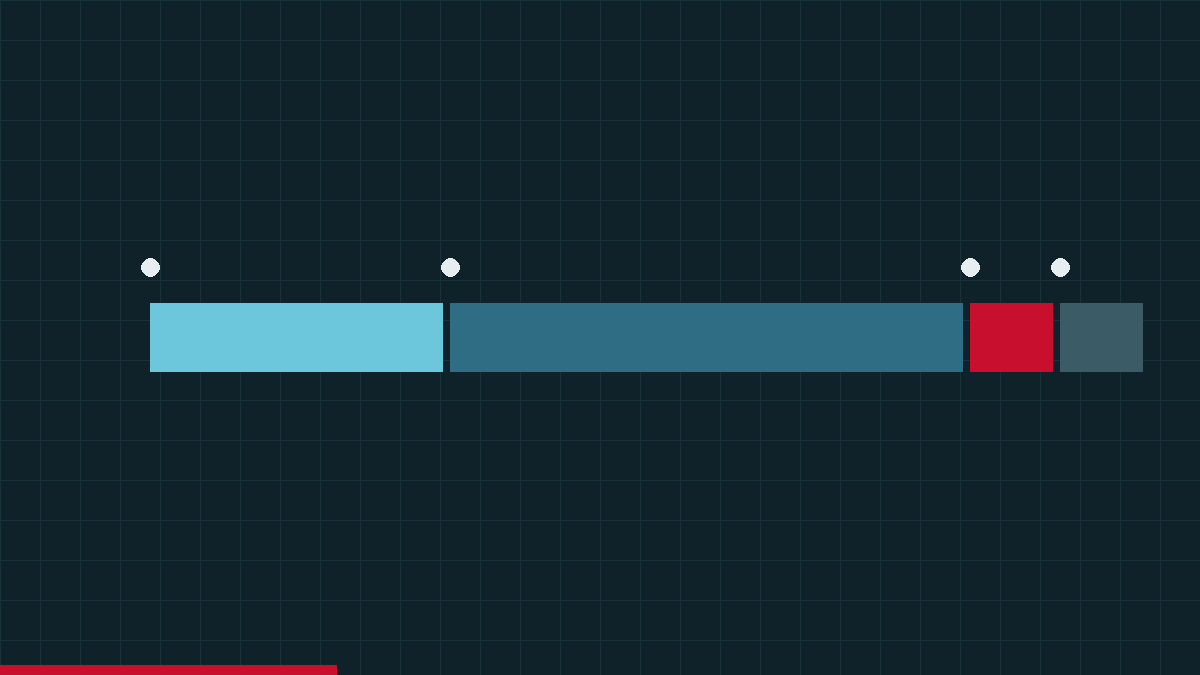
Ask when an expired .co.uk becomes available again and one source will say 90 days, another 95. Both are right, because they describe different moments. Under the process Nominet has run since 13 September 2022, the holder can renew a .uk name until precisely 90 days after its expiry timestamp. Five days later, precisely 95 days after expiry, the name drops, at a time published in advance on a daily drop list.
That process has an end date. Nominet moves .uk to a standardised registry on 9 February 2027, with different grace periods. This article sets out the lifecycle that applies today, what has been announced for February, and what the drop list can and cannot tell you. It then reports what we found when we followed the list for 45 days, in which 205,988 names reached their drop time.
The .uk lifecycle in force today
Nominet's renewal procedure for registrars states the current rules plainly. A .uk name can be renewed up to precisely 90 days after its expiry timestamp, cannot be renewed after that, and drops precisely 95 days after expiry.
In between, the name passes through three stages. For the first 30 days, the expiry grace period, it is still registered, fully operational and renewable. From day 30 to day 90, the redemption grace period, it carries the pendingDelete status and stops resolving, so a website or email address on it stops working, but the holder can still renew. From day 90 to day 95, the pending delete grace period, it still does not resolve and can no longer be renewed. At day 95 it drops, and any registrar can register it again.
Nominet emails the registrant along the way: one day after expiry if no renewal has arrived, at day 23 to warn that suspension is a week away, at day 30 to say the name has been suspended but can still be renewed through the registrar, and at day 83 to warn that it will be cancelled. Registrars get their own warning three months before names on their tag are due for renewal.
The current .uk expiry timeline (since 13 September 2022)
Applies until the move to Nominet's standardised registry on 9 February 2027.
| Days after expiry | Stage | Does it resolve? | Can the holder renew? | Emails to the registrant |
|---|---|---|---|---|
| 0–30 | Expiry grace period (registered) | Yes, fully operational | Yes | Day 1: renewal reminder. Day 23: suspension warning |
| 30–90 | Redemption grace period (pendingDelete) | No | Yes, until precisely day 90 | Day 30: suspension notice. Day 83: cancellation warning |
| 90–95 | Pending delete grace period | No | No | None |
| 95 | Drop, at the time published on the drop list | No | No; the name is open to re-registration through any registrar | None |
Source: Nominet Registrar Resources: 'New domain expiry process and introduction of drop lists for .UK' and 'How to renew domains'
Older consumer pages often say a .uk name becomes available 90 days after expiry. That described the process before September 2022, when, in the words of Nominet's own review of the change, "an expired domain name would drop at a random unknown time throughout a particular day." Today the two numbers belong to different people. Day 90 is the holder's last chance to renew. Day 95 is when the name is released, at a time anyone can look up.
What changes on 9 February 2027
Nominet has announced that .uk moves to its standardised registry platform on Tuesday 9 February 2027, and that new .uk policies and agreements (version 2026-03) take effect at the transition. The new lifecycle follows the model used by generic top-level domains: an auto-renew grace period of up to 45 days, then a 30-day redemption period and a 5-day pending delete period.
Three details matter to anyone watching expiring names. Registrars will choose between auto-delete, which Nominet describes as today's behaviour and which applies if they choose nothing, and auto-renew, the approach used for gTLDs. Under the new lifecycle policy a registrar may not renew a name without the registrant's explicit consent, and a name without that consent is deleted at some point up to the end of the auto-renew grace period, not on a fixed day. And registrars will not be required to cut off a name's DNS during auto-renew grace, whereas in redemption the registry switches resolution off. The fixed 90- and 95-day count described above will not carry over unchanged.
Nominet's preparation page does not say whether daily drop lists continue after the transition, and we have found no statement either way.
Today, and from 9 February 2027
| Stage | Today (since 13 September 2022) | From 9 February 2027 (announced) |
|---|---|---|
| After expiry | 30-day expiry grace period; the name keeps working | Auto-renew grace period of up to 45 days; registrars are not required to interrupt DNS |
| Redemption | Day 30 to day 90; does not resolve; still renewable | 30 days; the registry disables DNS resolution |
| Pending delete | Day 90 to day 95; cannot be renewed | 5 days, after which the name is purged from the registry |
| Release | Precisely 95 days after expiry, at the time on the daily drop list | At the end of pending delete, which depends on when the name was deleted; Nominet has not said whether drop lists continue |
Source: Nominet Registrar Resources: '.UK is changing: you need to get ready' and '.UK Policies' (Registry-Registrar Lifecycle Policy v2026-03)
What Nominet's drop list contains
Since the 2022 change Nominet has published a daily list of names that may drop, with the exact time each one will. It is meant to help registrars see which names are likely to become available, and Nominet describes drop lists as "open and available to the public". The list is generated at the same time each day, or later that day if a technical problem intervenes. Nominet does not state the clock time.
The file, uk.csv.gz, is a gzipped CSV published with a SHA-256 checksum. Each row has three fields: roid, the registry's permanent identifier for the domain; domain; and drop_time, the moment from which the name can be registered again, in ISO format. A time ending in Z is UTC, so during British Summer Time a name listed for 13:00Z drops at 14:00 UK time.
The part most often missed is which names are on it. The list holds every name with the pendingDelete status: names still in redemption, which the holder can renew, and names in the final pending delete period, which cannot be renewed. Nominet's specification says that names in redemption may be renewed and removed from the next day's list, while names in pending delete will drop at the specified time. A name on the list is a name that may drop. Only in its last five days is it certain to.
Known drop times were introduced so that registrars would not "spend many hours monitoring for the domain becoming available". Nominet's review of the change found that queries to its real-time Domain Availability Checker fell overnight "from close to 70 million queries per day to around 6 million queries per day".
For history only: Nominet's 2020 consultation reported that in 2018, under the old process, an average of 4,849 expired .uk names were released for re-registration each day (median 4,701). Those figures predate the drop list and count something different from our study, so they are not directly comparable with it.
Study: 45 days of Nominet's drop list
The question
How many .uk names reach their published drop time each day? When in the day and week do they drop, and what kind of names are they? How far ahead do they appear on the list, and how many leave it before they drop?
The dataset
Nominet's published drop list, as imported daily by DropOps: 79 completed imports made between 14 July and 30 September 2026. Each row is one list entry, a domain's ROID and its scheduled drop time. DropOps began tracking individual entries on 15 August 2026, so no earlier drop is included.
Sample size and date range
Whole UK calendar days from 17 August to 30 September 2026, 45 days in all. In that window 205,988 names reached their drop time while still on the list, at 168,235 distinct drop times.
How we measured this
An entry counts as dropped when its scheduled drop time passed while it was still on the latest list. That is not proof the name was released or re-registered; it means only that nothing took it off the list first. An entry counts as having left the list when it is missing from a later completed list before its drop time. That is usually a renewal, but it is inferred from absence. Days, weekdays and hours are UK time, and the whole window fell in British Summer Time (UTC+1). For the lead-time measure we used only entries first seen from 17 August, so that a first sighting is a real first listing. For the leaving-the-list share we used only drops in the window that we had observed on the list for at least 30 days. The query is read-only and was extracted on 7 October 2026, limited to the rows present at that point.
Exclusions
Drops before 17 August 2026. Entries first seen in the initial load of mid-August, for the lead-time measure only. An entry whose drop time was replaced by a new one counts once, at the new time.
How many names reach their drop time
On an average UK day in the window, 4,578 names reached their drop time. The median day was lower, at 4,231, because a few heavy days pull the mean up. The busiest day had 7,406 and the quietest 3,204.
Sundays averaged the most names reaching their drop time (4,943) and Fridays the fewest (3,936), but with only six or seven of each weekday in the window, one heavy day can move a weekday's average.
Show the data behind this chart
Names reaching their drop time, by day of the week
Mean per day, 17 August – 30 September 2026 (UK dates). Monday to Wednesday had 7 days each in the window; Thursday to Sunday had 6.
| Day of the week (UK) | Mean per day (names) |
|---|---|
| Mon | 4,747 |
| Tue | 4,727 |
| Wed | 4,568 |
| Thu | 4,423 |
| Fri | 3,936 |
| Sat | 4,647 |
| Sun | 4,943 |
Source: DropOps analysis of Nominet's published drop list, 17 Aug–30 Sep 2026 (n = 205,988)
Read the weekday pattern with care. The window holds seven Mondays, Tuesdays and Wednesdays but six of every other weekday, and the gap between the highest and lowest weekday averages, about a thousand names, is about a quarter of the gap between the busiest and quietest single days. A name's drop day is fixed by its expiry timestamp 95 days earlier, not by anything that happens in drop week. We would not plan around a weekday.
When in the day names drop
About half of all drops fell between 10:00 and 17:00 UK time, the busiest hour was 14:00 to 15:00, and roughly one in eleven fell between midnight and 07:00.
Show the data behind this chart
Share of drops by hour of the day (UK time)
205,988 names reaching their drop time, 17 August – 30 September 2026 (all British Summer Time)
| Hour starting (UK time) | Share of drops (% of drops) |
|---|---|
| 00:00 | 1.99 |
| 01:00 | 1.26 |
| 02:00 | 1.14 |
| 03:00 | 0.84 |
| 04:00 | 0.96 |
| 05:00 | 1.24 |
| 06:00 | 1.53 |
| 07:00 | 2.14 |
| 08:00 | 3.29 |
| 09:00 | 5.5 |
| 10:00 | 6.78 |
| 11:00 | 7.32 |
| 12:00 | 7.12 |
| 13:00 | 6.92 |
| 14:00 | 7.59 |
| 15:00 | 7.14 |
| 16:00 | 6.67 |
| 17:00 | 5.7 |
| 18:00 | 4.71 |
| 19:00 | 4.55 |
| 20:00 | 4.49 |
| 21:00 | 4.23 |
| 22:00 | 3.88 |
| 23:00 | 3 |
Source: DropOps analysis of Nominet's published drop list, 17 Aug–30 Sep 2026 (n = 205,988)
Drop times are not bunched at one moment: the 205,988 names dropped at 168,235 different times. The hourly share rises through the morning, holds between about 6.7% and 7.6% an hour from 10:00 to 17:00, and tails off through the evening. The busiest hour was 14:00 to 14:59, with 7.59% of drops; the quietest was 03:00 to 03:59, with 0.84%. The seven hours from 10:00 to 16:59 took 49.54% of all drops, and the seven from midnight to 06:59 about 9%.
Because a name drops precisely 95 days after its expiry timestamp, it drops at the time of day its expiry falls. We did not test why expiries cluster in the working day. Names first registered during office hours would produce this shape, but that is an explanation, not a finding.
Which names drop
Names reaching their drop time, by suffix
| Suffix | Names | Share |
|---|---|---|
| .co.uk | 168,997 | 82.04% |
| .uk | 30,554 | 14.83% |
| .org.uk | 5,671 | 2.75% |
| .me.uk | 709 | 0.34% |
| .ltd.uk | 51 | 0.02% |
| .net.uk | 5 | 0.00% |
| .plc.uk | 1 | 0.00% |
Source: DropOps analysis of Nominet's published drop list, 17 Aug–30 Sep 2026 (n = 205,988)
Four in five dropping names were .co.uk (82.04%) and about one in seven was a second-level .uk (14.83%). Most of the rest were .org.uk (2.75%) and .me.uk (0.34%), with a handful from the restricted suffixes: 51 .ltd.uk names, 5 .net.uk and 1 .plc.uk.
The names are long. The median label, the part before the first dot, was 13 characters, and one in eight (12.80%) ran to 20 characters or more. Very short names are rare: in 45 days, 378 names of three characters or fewer reached their drop time. One label in ten (10.36%) contained a hyphen.
Label length and characters, names reaching their drop time
The label is the part of the name before the first dot, so example.co.uk has a 7-character label.
| Measure | Value |
|---|---|
| Median label length | 13 characters |
| Mean label length | 13.3 characters |
| 10th and 90th percentile | 7 and 20 characters |
| Labels of 3 characters or fewer | 378 (13 of two characters, 365 of three) |
| Labels of 5 characters or fewer | 11,977 |
| Labels of 20 characters or more | 26,366 (12.80%) |
| Contain a hyphen | 10.36% |
| Contain a digit | 4.23% |
| All digits | 0.15% |
| Internationalised (xn--) labels | 0 |
Source: DropOps analysis of Nominet's published drop list, 17 Aug–30 Sep 2026 (n = 205,988)
How far ahead names appear on the list
For entries first seen from 17 August, the gap between a name's first appearance on the list and its drop time was strikingly consistent: a median of 64.3 days, with the 10th and 90th percentiles at 63.9 and 64.7 days. Of the 258,656 entries measured, including names whose drop time is still to come, 235,368 (about 91%) were listed at least 60 days ahead.
That lines up with the lifecycle. A name drops 95 days after expiry and takes the pendingDelete status that puts it on the list 30 days after expiry; 95 minus 30 is 65. A median of 64.3 days is consistent with names joining the list at, or within about a day of, suspension. That is a reading of the data, not proof: Nominet does not state how far ahead the list runs.
How many names leave the list before they drop
A listed name can be renewed until day 90, so some leave the list. Counting them is harder than it looks, because a name renewed before we started watching never enters our data. We therefore took the drops in the window that we had observed on the list for at least 30 days before their drop time. Of those 71,945 entries, 6,006, or 8.35%, left the list before their drop time.
Treat 8.35% as a lower bound. Given how far ahead names are listed, nearly all of them were already on the list when tracking began on 15 August, and any renewal in those unobserved weeks is missing from both sides of the sum. The true share of listed names that never drop is higher; this data cannot say by how much.
When names leave is clearer. The table below takes every entry that had left the list by the extraction date, 30,735 in all, and measures the gap between the last list that still held it and its scheduled drop time.
When names left the list
The bands are unequal: 0–4 and 5–9 cover five days each, the others ten, and 60 or more is open-ended. This table covers every entry that had left the list by 7 October 2026, including names due to drop after the study window. Leaving the list is inferred from absence and is normally a renewal.
| Days between the last list that held the name and its scheduled drop | Entries |
|---|---|
| 0–4 | 2 |
| 5–9 | 6,921 |
| 10–19 | 3,764 |
| 20–29 | 3,457 |
| 30–39 | 2,702 |
| 40–49 | 3,825 |
| 50–59 | 4,980 |
| 60 or more | 5,084 |
Source: DropOps analysis of Nominet's published drop list (all 30,735 entries that had left the list by 7 October 2026)
Two clusters stand out. The busiest band for its width is 5 to 9 days before the drop: 6,921 names were last seen on a list in that band, which for a name dropping at day 95 means leaving around days 86 to 90, after Nominet's day-83 cancellation warning and before the day-90 cut-off. The other cluster sits at the start: 5,084 names left 60 or more days before their drop, within days of first appearing on the list, around the time of suspension, when a website and email on the name stop working. Both fit renewals prompted by the moments a registrant is most likely to notice. Our data shows when names left, not why. Because tracking started in mid-August, the observation window favours some bands over others, so read the shape rather than the exact shares.
Inside the final five days the picture is close to absolute. Of 205,990 entries in the window still on the list within five days of their drop time, 205,988 reached it and 2 left. That is what the rules predict, since from day 90 a name cannot be renewed. We have not investigated the two exceptions.
Limitations
Tracking began on 15 August 2026, so names renewed before then are invisible to us, which is why the leaving-the-list figure is a lower bound. "Dropped" here means a name's drop time passed while it was listed; we did not check whether each name was released, or who registered it afterwards. Leaving the list is inferred from absence, and although that is usually a renewal, the list does not say why a name has gone.
The study covers one season, 45 days in late summer 2026; volumes and patterns may differ at other times of year, and the lifecycle itself changes in February 2027. Everything comes from one source, Nominet's list as DropOps imported it once a day, so a late or failed import shifts an entry's first or last sighting by a day.
What the data says
Over 45 days in 2026, an average of about 4,600 .uk names a day reached their published drop time. They were overwhelmingly .co.uk, mostly long, and spread across the day rather than bunched at a single moment. Names appear on Nominet's list about 64 days ahead, consistent with joining it at suspension. At least one in twelve of the names we could follow for a month left before dropping, and the leavers clustered just after suspension and in the last days before the day-90 cut-off. Once a name was inside its final five days, it reached its drop time in all but 2 of 205,990 cases.
If you want a name that's on the list
None of this is a method for securing a name. It is what the list can and cannot tell you.
Until day 90, read the list as "may drop". A name in redemption can still be renewed, at least 8.35% of the names we could watch for a month were, and departures bunch in the week before the cut-off. Once the drop time is less than five days away the name is in pending delete and cannot be renewed, which is why 205,988 of 205,990 such names in our window reached their drop time. Convert the UTC time in the file to UK time, and expect no single daily moment to watch: about 9% of drops fell between midnight and 07:00.
Reaching the drop time is not the same as staying free for long. After the drop, any registrar can register the name, and when several try at once Nominet notes that only one create command succeeds. Its review of the 2022 change also found that the share of dropped names re-registered within a second "appears to have increased".
A dropped name can also carry a previous owner's history, links and trade mark exposure, so research it before you want it: our guide to researching a .uk domain before you buy sets out the checks, and what 24,675 UK auction results show covers what similar names have fetched and how far reported prices can be trusted.
DropOps imports Nominet's drop list every day and shows dropping and dropped .uk names in Discover; names on Dropping soon are shown to subscribers. Names that have dropped and are free to register are on available domains.
Sources
- How to renew domains — Nominet (Registrar Resources)
- .uk Renewal Reminder — Nominet (Registrar Resources)
- New domain expiry process and introduction of drop lists for .UK — Nominet (Registrar Resources)
- Drop Lists for backorders — Nominet (Registrar Resources)
- Drop Lists — Nominet (Registrar Resources)
- .UK Expiring domains implementation review — Nominet
- 2020 .UK Expiring Domains Consultation — Nominet, 2020-07-16
- .UK is changing: you need to get ready — Nominet (Registrar Resources)
- .UK Policies (including the .UK Registry-Registrar Lifecycle Policy v2026-03) — Nominet (Registrar Resources)
Related reading

How to research a .uk domain before you buy it
What to check before you buy a .uk domain, where, and in what order: the registration record, the name's past life in public web archives, trade marks and company names, the DRS test, links, sale evidence and spam signals, with what each check can't tell you.

UK domain sales: what 24,675 auction results show
We analysed 24,675 sales of expired .uk domain names at drop auction, reported by DomainLore between February 2009 and September 2026. The median was £102 and nearly half sold for £50–£99. The method, exclusions and limits are set out in full.

How to repurpose an old domain safely
Building a new site on an expired domain is fine if it serves people first. Here is what Google's expired domain abuse policy says, the UK brand risks it does not cover, how to treat old URLs and backlinks honestly, and a checklist to run before launch.